Author: Humaura Talent

  • Navigating the “AI-on-AI” Hiring War: Why Human Vetting Matters More Than Ever in June 2026

    Navigating the “AI-on-AI” Hiring War: Why Human Vetting Matters More Than Ever in June 2026

    If you feel like your hiring pipeline has become noisier, slower, and stranger over the last few months, you aren’t alone.

    As we hit the midway point of 2026, the recruitment landscape has officially entered a new, complicated era. We are no longer just looking at a talent shortage or a skills gap. Instead, corporate HR departments and business leaders are locked in an intense, automated tug-of-war: The AI-on-AI Hiring War.

    On one side, candidates are deploying highly sophisticated generative AI agents to automatically optimize their CVs, draft hyper-tailored cover letters, and blast out hundreds of perfect-looking applications across the globe in seconds.

    On the other side, overwhelmed talent acquisition teams are turning to their own automated Applicant Tracking Systems (ATS) to filter, score, and auto-reject that very same tidal wave of applications.

    The result? Algorithms are talking to algorithms. The traditional corporate hiring pipeline is broken, choked by artificial perfection. And for companies trying to scale quickly with real, high-performing human beings, this automated noise is costing time, money, and growth.

    The Illusions of the “Perfect” AI Resume

    Two years ago, a flawless resume, an impeccably structured portfolio, and a tailored cover letter were strong indicators of a top-tier candidate. Today, it simply means they have a decent internet connection and a good prompt.

    When every application landing in your inbox reads like it was written by a Harvard graduate with ten years of hyper-specific industry tenure, standard keyword filtering stops working. AI-generated resumes bypass traditional ATS keywords seamlessly because they are engineered by algorithms specifically designed to defeat them.

    This leaves business leaders with a frustrating paradox: Your inbox is overflowing with “perfect” candidates, yet your open roles remain unfilled because finding the actual talent behind the screen is harder than ever.

    The True Cost of a Mis-Hire in 2026

    In a fast-moving market like the UAE or the global tech sector, a bad hire is more than just an HR headache; it is an expensive operational roadblock.

    When a candidate looks phenomenal on paper but lacks the actual problem-solving depth, behavioral adaptability, or practical execution skills required for the role, the fallout is swift:

    • Stalled Timelines: Projects freeze while you spend weeks offboarding and restarting the search.

    • Team Burnout: Existing staff have to absorb the slack, damaging morale.

    • Sunk Capital: Between traditional percent-based recruitment fees (which can eat up 15–20% of an annual salary) and onboarding costs, a single bad hire can quietly cost a business tens of thousands of dollars.

    To win the talent race today, companies must look past the algorithmic digital storefront. The solution isn’t adding more AI filters to your stack; it’s reintroducing rigorous, expert human verification earlier in the process.

    How We Cut Through the Noise: The Humaura Approach

    At Humaura, we realized early on that the 2026 talent landscape required a fundamental shift in how talent is sourced, verified, and placed. We don’t just match keywords; we match capabilities.

    We’ve stripped the fluff out of the traditional agency model to give businesses an agile, human-first hiring advantage:

    • Deep Pre-Screening: Every candidate we introduce has passed a rigorous internal human verification process. We assess actual execution capacity, behavioral alignment, and problem-solving skills—ensuring the person you interview matches the excellence on the page.

    • Speed to Market: Because we maintain an active, continuously vetted global ecosystem of elite talent across technology, leadership, and core functional roles, we can introduce pre-screened talent to your team in as little as 48 hours to two weeks.

    • Zero Financial Risk: We believe modern businesses shouldn’t be penalized with massive, unpredictable percentage-based fees just to find good people. Humaura operates on an affordable, completely transparent flat-rate commission model.

    Reclaim Your Time and Scale with Confidence

    The businesses that succeed in the latter half of 2026 won’t be the ones with the heaviest automation software. They will be the ones that build teams of genuine, adaptable human talent who can execute real-world strategy.

    Don’t let your internal teams waste valuable hours refereeing a battle between candidate AI bots and your ATS. Let us handle the noise so you can focus on building what’s next.

    Ready to find your next high-impact team member without the fluff?

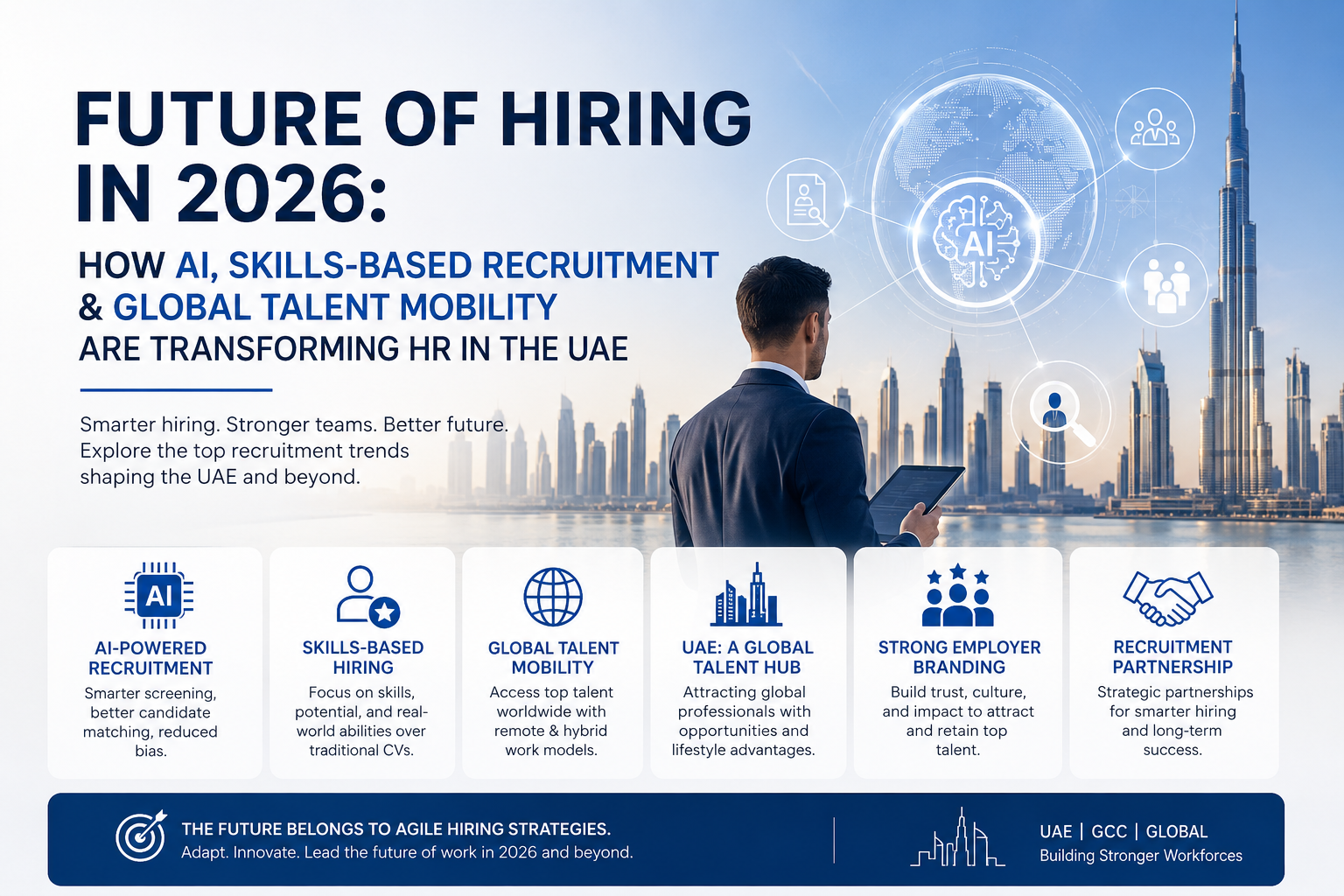
  • Future of Hiring in 2026: AI & Skills-Based Recruitment in UAE

    Future of Hiring in 2026: AI & Skills-Based Recruitment in UAE

    Introduction: A New Era of Hiring Has Arrived

    The hiring landscape in 2026 is undergoing one of its most significant transformations in decades. Organizations in the UAE and across the globe are no longer relying only on traditional recruitment methods. Instead, they are embracing AI-driven hiring, skills-based assessments, and global remote talent pools to stay competitive.

    For companies in fast-growing hubs like Dubai, Abu Dhabi, and the wider GCC region, the ability to attract and retain the right talent has become a strategic advantage; not just an HR function.

    1. AI is Now a Core Part of Recruitment

    Artificial Intelligence is no longer optional in recruitment; it is foundational.

    In 2026, companies are using AI to:

    • Screen resumes in seconds with higher accuracy
    • Match candidates based on skills, not just job titles
    • Predict cultural fit and job performance
    • Reduce unconscious bias in early-stage hiring

    However, while AI improves efficiency, the human element in hiring remains essential for final decision-making and relationship building.

    2. Skills-Based Hiring is Replacing Traditional CV Screening

    One of the biggest shifts in recruitment is the move from “experience-first” to skills-first hiring.

    Employers in the UAE are increasingly prioritizing:

    • Demonstrated technical skills
    • Problem-solving ability
    • Adaptability and learning mindset
    • Real-world project experience

    This shift is especially important in industries like technology, hospitality, healthcare, and professional services where job roles evolve rapidly.

    3. Remote & Hybrid Hiring is Now Standard

    What started as a pandemic-era adjustment has now become a long-term workforce model.

    In 2026, UAE companies are:

    • Hiring remote employees across multiple countries
    • Building hybrid workforce structures
    • Accessing global talent pools to fill skill gaps
    • Offering flexible working arrangements as a retention strategy

    This has made competition for talent truly global.

    4. The UAE Remains a Global Talent Hub

    Despite global competition, the UAE continues to attract professionals due to:

    • Strong economic diversification
    • Tax-friendly income structure
    • High-quality lifestyle and infrastructure
    • Expanding industries like AI, fintech, and sustainability

    This positions the region as a key destination for international professionals and companies building regional headquarters.

    6. Recruitment Agencies are Becoming Strategic Partners

    Modern recruitment firms are no longer just “resume suppliers.” They now act as:

    • Workforce consultants
    • Talent strategy advisors
    • Market intelligence providers
    • Hiring process optimizers

    Businesses are increasingly partnering with specialized recruitment firms to reduce hiring risks and improve quality of hire.

    The Future Belongs to Agile Hiring Strategies

    The recruitment landscape in 2026 is defined by speed, intelligence, and adaptability. Companies that embrace AI tools, prioritize skills over titles, and build strong talent strategies will outperform those relying on traditional hiring methods.

    For businesses in the UAE, the opportunity is clear: evolve your hiring strategy or risk losing top talent to more agile competitors.

  • Relocating to the UAE as a Tech Professional: The Complete Guide (2026)

    Relocating to the UAE as a Tech Professional: The Complete Guide (2026)

    The UAE has become one of the most attractive destinations for tech professionals worldwide. With tax-free salaries, rapid digital transformation, and a thriving startup ecosystem, cities like Dubai and Abu Dhabi are attracting top talent globally.

    Why the UAE is a Hotspot for Tech Talent

    The UAE government has heavily invested in becoming a global tech hub, focusing on AI, fintech, and smart infrastructure.

    • Tax-free income
    • Competitive salaries
    • High demand for tech talent
    • Modern infrastructure
    • Global work exposure

    Major companies like Microsoft, Amazon, and Google have a strong presence in the region.

    Most In-Demand Tech Jobs in the UAE

    • Software Engineers (Frontend, Backend, Full Stack)
    • Cloud Engineers (AWS, Azure, GCP)
    • Data Scientists & AI Engineers
    • Cybersecurity Specialists
    • DevOps Engineers
    • UI/UX Designers
    • Product Managers

    Salaries for Tech Professionals in the UAE

    Average monthly salaries:

    • Junior Developer: AED 8,000 – 15,000
    • Mid-Level Engineer: AED 15,000 – 30,000
    • Senior Engineer: AED 30,000 – 55,000+
    • Tech Leads / Managers: AED 40,000 – 70,000+

    Additional benefits may include housing allowance, health insurance, flight tickets, and bonuses.

    Visa Options for Tech Professionals

    Employment Visa

    Sponsored by your employer; the most common option.

    Golden Visa

    Long-term residency option for highly skilled professionals.

    Freelance Visa

    Ideal for remote workers and independent professionals.

    Cost of Living in the UAE

    • Rent (1-bedroom): AED 4,000 – 10,000+
    • Utilities: AED 500 – 1,000
    • Groceries: AED 800 – 1,500
    • Transport: AED 300 – 800

    More affordable options are available in Sharjah and Ajman.

    Best Areas to Live for Tech Professionals

    Dubai

    • Dubai Marina – lively and social
    • Downtown Dubai – central and premium
    • Jumeirah Village Circle – budget-friendly

    Abu Dhabi

    • Al Reem Island – modern and popular
    • Yas Island – lifestyle-focused

    How to Find Tech Jobs in the UAE

    • LinkedIn
    • Indeed
    • Bayt

    Working with recruitment agencies can speed up the hiring process.

    Work Culture in the UAE Tech Industry

    • English is the primary business language
    • Multicultural work environment
    • Fast-paced and results-driven

    Tips Before You Relocate

    • Secure a job before moving
    • Negotiate full compensation package
    • Understand visa terms
    • Plan accommodation in advance
    • Build your professional network

    Final Thoughts

    Relocating to the UAE as a tech professional offers strong career growth, financial benefits, and global exposure. With the right preparation, it can be a highly rewarding move.

  • 2026 Tech Salary Benchmarks in the UAE: Roles, Trends & Pay Insights

    2026 Tech Salary Benchmarks in the UAE: Roles, Trends & Pay Insights

    The UAE tech salary landscape in 2026 is highly competitive, with significant variation depending on company type, experience, and specialization. Cities like Dubai and Abu Dhabi continue to attract global tech talent with strong compensation and tax-free income.

    Overview: What Tech Professionals Earn in 2026

    • Median salary: AED 300,000/year (~AED 25,000/month)
    • Typical range: AED 240,000 – 430,000/year

    Top-tier roles in AI, cloud, and fintech can exceed these ranges significantly.

    Salary Benchmarks by Experience

    Entry-Level (0–2 years)

    • AED 85,000 – 145,000/year
    • AED 7,000 – 12,000/month

    Mid-Level (3–6 years)

    • AED 180,000 – 330,000/year
    • AED 15,000 – 27,000/month

    Senior Engineers (7+ years)

    • AED 350,000 – 600,000+/year
    • AED 30,000 – 50,000+/month

    Tech Leads / Principal Engineers

    • AED 500,000 – 700,000+/year
    • AED 40,000 – 60,000+/month

    Dubai vs Abu Dhabi: Salary Differences

    Dubai

    • More startups and tech hubs
    • Higher salary ceiling
    • Wider variation in pay

    Abu Dhabi

    • More government-backed roles
    • Stable compensation structures
    • Strong demand in AI and enterprise tech

    Role-Based Salary Benchmarks

    • Software Engineers: AED 240K – 430K/year
    • Data Scientists / AI Engineers: AED 300K – 700K+/year
    • DevOps / Cloud Engineers: AED 250K – 500K/year
    • Cybersecurity Specialists: AED 280K – 550K/year
    • Product Managers: AED 300K – 600K+/year

    Top Paying Skills in 2026

    • Artificial Intelligence & Machine Learning
    • Cloud Computing (AWS, Azure, GCP)
    • Backend Development (Java, Python, Go)
    • Distributed Systems
    • Cybersecurity

    Specialists in these areas can exceed AED 600,000 annually.

    What Influences Your Salary

    1. Company Type

    • Big Tech and unicorn startups offer the highest pay
    • Funded startups offer competitive salaries and equity
    • SMEs and agencies typically offer lower compensation

    2. Negotiation

    Two candidates with the same experience can earn significantly different salaries depending on negotiation.

    3. Skill Specialization

    Niche and high-demand skills can dramatically increase your earning potential.

    Final Thoughts

    Tech salaries in Dubai and Abu Dhabi are among the most attractive globally due to tax-free income and strong demand. However, outcomes depend heavily on your skillset, experience, and the type of company you join.

  • How to Hire Remote Employees for Your UAE Startup: A Complete Guide

    How to Hire Remote Employees for Your UAE Startup: A Complete Guide

    How to Hire Remote Employees for Your UAE Startup: A Complete Guide

    Hiring remote developers has become one of the smartest ways for UAE startups to scale quickly without the high costs of local hiring. With access to global talent pools, startups in Dubai and Abu Dhabi can build high-performing tech teams at a fraction of the cost.

    Why UAE Startups Are Hiring Remote Developers

    • Reduce hiring and operational costs
    • Access a wider global talent pool
    • Faster hiring timelines
    • Flexibility to scale teams up or down

    Popular hiring regions include India, Eastern Europe, Southeast Asia, and Africa.

    Step 1: Define Your Requirements Clearly

    Before you start hiring, get specific about what you need.

    • Tech stack (e.g., React, Node.js, Python)
    • Experience level (junior, mid, senior)
    • Project scope (short-term vs long-term)
    • Time zone overlap requirements

    Clear requirements help you filter candidates faster and avoid mismatches.

    Step 2: Choose the Right Hiring Model

    Freelancers

    Best for short-term or project-based work.

    Full-Time Remote Employees

    Ideal for building a long-term team.

    Outsourcing Agencies

    Useful if you want a fully managed development team.

    Step 3: Source Candidates from the Right Platforms

    • LinkedIn
    • GitHub
    • Upwork
    • Toptal
    • Stack Overflow Jobs

    You can also partner with recruitment agencies specializing in global tech hiring.

    Step 4: Vet Candidates Properly

    Hiring remotely increases the risk of mismatches, so vetting is critical.

    • Review portfolios and past projects
    • Conduct technical interviews
    • Assign real-world coding tests
    • Evaluate communication skills

    Always prioritize problem-solving ability over just theoretical knowledge.

    Step 5: Handle Legal & Payment Structures

    When hiring internationally, compliance matters.

    • Use contracts that define scope, timelines, and IP ownership
    • Consider Employer of Record (EOR) services
    • Ensure compliance with UAE labor and tax regulations

    Step 6: Set Up the Right Tools

    Remote teams rely heavily on tools for collaboration and productivity.

    • Communication: Slack, Zoom
    • Project Management: Jira, Trello
    • Code Collaboration: GitHub, GitLab
    • Documentation: Notion, Confluence

    Step 7: Manage Remote Developers Effectively

    • Set clear expectations and KPIs
    • Schedule regular check-ins
    • Focus on outcomes, not hours worked
    • Build a strong remote culture

    Trust and communication are key to successful remote teams.

    Common Mistakes to Avoid

    • Hiring too quickly without proper vetting
    • Ignoring time zone differences
    • Lack of clear documentation
    • Not setting performance expectations early

    Final Thoughts

    Hiring remote developers can give your UAE startup a major competitive advantage. With the right strategy, tools, and processes, you can build a scalable, high-performing global tech team without being limited by geography.

  • UAE Tech Talent Boom 2026: Why Global Professionals Are Moving to the UAE

    UAE Tech Talent Boom 2026: Why Global Professionals Are Moving to the UAE

    UAE Tech Talent Boom 2026: Why Global Professionals Are Moving to the UAE

    The UAE has rapidly positioned itself as one of the most attractive destinations for tech professionals globally. In 2026, cities like Dubai and Abu Dhabi are not just competing with traditional tech hubs, they are outperforming many of them in key areas like compensation, lifestyle, and growth opportunities.

    1. Strong Government Backing for Technology

    The UAE government plays a central role in building a future-ready digital economy. Initiatives focused on artificial intelligence, blockchain, and smart cities have created a strong foundation for innovation.

    Programs such as the UAE AI Strategy and national digital economy initiatives continue to attract global talent and investment, making the country a leader in emerging technologies. 

    2. A Rapidly Growing Tech Ecosystem

    The UAE is home to thriving innovation hubs, startup ecosystems, and global companies. Dubai alone ranks among the top global cities for tech workforce and infrastructure. 

    In Abu Dhabi, ecosystems like Hub71 support hundreds of startups across fintech, AI, and health tech, creating a strong pipeline of opportunities for developers, engineers, and product professionals. 

    3. Global Demand for UAE Tech Jobs

    The UAE’s reputation as a tech hub is growing fast. Surveys show that:

    • 81% of tech professionals recognize the UAE as a growing tech hub
    • 45% are willing to relocate for work

    This puts the UAE ahead of traditional destinations like Germany and Hong Kong in terms of attractiveness for tech talent. 

    4. Tax-Free Salaries and High Earning Potential

    One of the biggest advantages is the UAE’s tax-free income structure. Professionals can retain a significantly higher portion of their salary compared to Europe or North America.

    Combined with competitive salaries, this makes the UAE one of the most financially rewarding destinations for tech professionals.

    5. Strategic Location Connecting Global Markets

    The UAE’s geographic position connects Asia, Europe, and Africa, giving professionals and companies access to a massive global market.

    This makes it an ideal base for startups and tech companies looking to scale internationally.

    6. Business-Friendly Environment & Free Zones

    Free zones across the UAE allow:

    • 100% foreign ownership
    • Fast company setup
    • Minimal bureaucracy

    These policies lower the barrier to entry for startups and attract both founders and skilled professionals. 

    7. Massive Investment in AI & Cloud Infrastructure

    The UAE is attracting billions in tech investments. Companies like Microsoft are investing heavily in AI and cloud infrastructure, strengthening the country’s position as a global innovation hub. 

    These investments are expected to create thousands of high-paying tech jobs in the coming years.

    8. High Quality of Life and Safety

    Beyond work, the UAE offers a high standard of living, modern infrastructure, and one of the safest environments globally.

    For many professionals, this combination of career growth and lifestyle benefits makes relocation an easy decision.

    9. Talent-Focused Visa Programs

    The UAE continues to evolve its visa system to attract top talent. Long-term residency options like the Golden Visa are specifically designed for skilled professionals in tech and innovation sectors. 

    10. A Future-Focused Digital Economy

    The UAE is actively transitioning from an oil-based economy to a knowledge-based economy driven by technology and innovation.

    This long-term vision ensures sustained demand for tech talent across industries, from fintech and AI to cybersecurity and digital commerce. 

    Final Thoughts

    In 2026, the UAE stands out as a global leader in attracting tech talent, not just because of salaries, but because of its ecosystem, vision, and execution.

    For tech professionals looking for growth, global exposure, and financial upside, the UAE is no longer an emerging option, it’s a top-tier destination.